The subject index
/
Provisional Government of 1917
hidden
|
All-Russian Congress of Workers' and Soldiers' Soviet Deputies, Second
THE SECOND ALL-RUSSIAN CONGRESS OF WORKERS' AND SOLDIERS' SOVIET DEPUTIES, was held at Smolny from 25 to 27 October (7 to 9 November) 1917. Its sitting was delayed on several occasions; from the middle of September until 20 October (2 November)
|
|
|
|
|
hidden
|
Antonov-Ovseenko V.A. (1883-1939), revolutionary, political figure
ANTONOV-OVSEENKO (real name Ovseenko) Vladimir Alexeevich (1883-1938), revolutionary. Studied at Nikolaevsky Military Engineering school of St. Petersburg, in 1901 was sacked for his refusal to swear loyalty
|
|
|
|
|
hidden
|
Archives, St. Petersburg
ARCHIVES, SAINT PETERSBURG, the Central State Archives of St. Petersburg situated at 15 Varfolomeevskaya Street. They were founded as the Leningrad Regional Archives of the October Revolution in 1936 and renamed as the State Archives of the October
|
|
|
|
|
hidden
|
Avksentyev N. D. (1878-1943), socialist revolutionary
AVKSENTYEV Nikolay Dmitrievich (1878-1943) statesman and publicist. He graduated from a Gymnasium in Penza (1897), and attended the Faculty of Law of Moscow University, in 1899; he was expelled for participating in the student movement
|
|
|
|
|
hidden
|
Bakhmetyev B.A. (1880-1951), physicist, hydraulic engineer
BAKHMETYEV Boris Alexandrovich (1880-1951), hydraulic engineer, statesman and public figure. Graduated from the Institute of Transport Communications Engineers (1902). From 1905, worked at the Polytechnic Institute, was appointed professor in 1913
|
|
|
|
|
hidden
|
Balk A.P., the city guard 1916-17
BALK Alexander Pavlovich (1866-1957), statesman, Major General (1912). He graduated from the First Cadet Corps (he was a classmate of the future last minister of Internal Affairs of the Russian empire A. D
|
|
|
|
|
hidden
|
Capital
CAPITAL. St. Petersburg was the capital of Russia from the 1710s until 10-11 March 1918. The city's status as capital came quite spontaneously, and was mostly due to Tsar Peter the Great's having settled there
|
|
|
|
|
hidden
|
Central Duma
CENTRAL DUMA (Central City Duma) is the elected organ of city self-government. It was set up by the Provisional Government after the February revolution of 1917, dealing with the same problems as the previous City Duma
|
|
|
|
|
hidden
|
Chernov V. M. (1873-1952), Socialist Revolutionary
CHERNOV Viktor Mikhailovich (1873-1952) was a political figure, sociologist, and publicist. On graduating from Derpt Gymnasium (1892) he entered the Faculty of Law of Moscow University, and participated in revolutionary circles
|
|
|
|
|
hidden
|
Civil governor
CIVIL GOVERNOR, the head of the provincial administration in St. Petersburg province. Officially the post of civil governor was founded in 1761 (before then, since 1736 the functions of civil governor were performed by the governor of province and
|
|
|
|
|
hidden
|
Committee for the Salvation of the Fatherland and the Revolution
COMMITTEE FOR THE SALVATION OF THE FATHERLAND AND THE REVOLUTION, An anti-Bolshevik organisation, established on the night of 26 October (old style: 8 November) 1917
|
|
|
|
|
hidden
|
Constituent Assembly, All-Russian
ALL-RUSSIAN CONSTITUENT ASSEMBLY, a body of representatives established on the basis of universal suffrage in order to form a government and draft a Constitution for Russia
|
|
|
|
|
hidden
|
Dubrovin A. I. (1855-1921), public figure
DUBROVIN Alexander Ivanovich (1855-1921) was a doctor, political and public figure, State Counsellor. On graduating from the Medical Surgical Academy (1879) he served as a military doctor. From 1889, he worked in children's orphanages of St
|
|
|
|
|
hidden
|
February Revolution of 1917
FEBRUARY REVOLUTION OF 1917 is the Second Russian Revolution, which dethroned the Monarchy. Decisive events developed in Petrograd. On 23 February (8 March) 1917
|
|
|
|
|
hidden
|
First All-Russian Congress of Soviets of Workers' and Soldiers' Deputies
FIRST ALL-RUSSIAN CONGRESS OF SOVIETS OF WORKERS' AND SOLDIERS' DEPUTIES. Held on 3-24 June (16 June - 7 July) 1917. Most of the sittings were held in the 1st Cadet Corps building (3/1 Kadetskaya Line); some were held at Tauride Palace
|
|
|
|
|
hidden
|
Gendarmerie
GENDARMERIE, 1) military police, which secured the rear of the standing army, aiming to prevent marauding and desertion. Gendarmerie was founded by M. B. Barclay de Tolly in 1815
|
|
|
|
|
hidden
|
Highest Organs of State Power (entry)
HIGHEST ORGANS OF STATE POWER. The first higher organ of state power to function in St. Petersburg was the Senate founded by Tsar Peter the Great in 1711. The Supreme Privy Council was founded under Empress Catherine I (1725-30)
|
|
|
|
|
hidden
|
Kerensky A.F. (1881-1970), political figure
KERENSKY Alexander Fedorovich (1881-1970), political figure and statesman, lawyer. In 1899, he entered the History and Philology Faculty of Petersburg University; in 1900, he moved to the Faculty of Law; after graduating (1904)
|
|
|
|
|
hidden
|
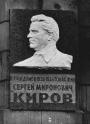
Kirov S.M. the 1st secretary of the regional party committee in 1926-34
KIROV (born Kostrikov) Sergey Mironovich (1886-1934, Leningrad), statesman and party worker. He graduated from Kazan Elementary Mechanical-technical School (1904)
|
|
|
|
|
hidden
|
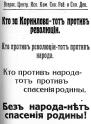
Kornilov Affair
KORNILOV AFFAIR (Kornilov's Advance, in Soviet literature - Kornilov's Revolt and "Kornilovshchina"), an attempt by the Supreme Commander-in-Chief General L.G. Kornilov in August (September) 1917 to avert the seizure of power by left-wing radicals
|
|
|
|
|
hidden
|
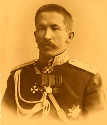
Kornilov L.G. (1870-1918), military commander, General
KORNILOV Lavr Georgievich (1870-1918), military commander, Infantry General (1917). Graduated from the Infantry Academy (1890), and the General Staff Academy (1896)
|
|
|
|
|
hidden
|
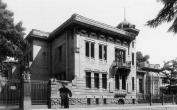
Kschessinska Mansion
KSCHESSINSKA MANSION (2 Kuybysheva Street /1 Kronverksky Avenue), a modernist architectural monument. The building was constructed in 1904-06 (architect. A. I. von Gogen) for ballet dancer M.F. Kschessinska
|
|
|
|
|
hidden
|
Lansere N.E. (1879-1942), architect
LANSERE Nikolay Evgenyevich (1879, St. Petersburg -1942), architect and graphic artist, architectural historian and teacher. He was the brother of E.E. Lansere and Z.E. Serebryakova
|
|
|
|
|
hidden
|
Lyceum
LYCEUM, Tsarskoe Selo Lyceum renamed Alexandrovsky Lyceum in 1843, a privileged higher education institution providing training for state officials. It was founded in 1810 and opened on 19 October 1811
|
|
|
|
|
hidden
|
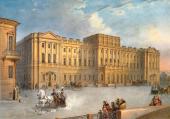
Mariinsky Palace
MARIINSKY PALACE (6 St. Isaac's Square), an architectural monument of late Neoclassicism. It was constructed in 1839-1844 (architect A.I. Stakensсhneider) on the left bank of the Moika River, close to the Siny Bridge
|
|
|
|
|
hidden
|
Mikhail Alexandrovich (1878-1918), Grand Prince
MIKHAIL ALEXANDROVICH (1878, St. Petersburg - 1918), Grand Prince, Lieutenant General (1916), Adjutant General (1914), Member of the State Assembly (from 1901)
|
|
|
|
|
hidden
|
Military Industrial Committees
MILITARY INDUSTRIAL COMMITTEES (VPK), public administration for military and economic regulation, established during the First World War of 1914-18 for the mobilisation of private enterprises to producing military goods
|
|
|
|
|
hidden
|
Milyukov P.N. (1859-1943), statesman, historian
MILYUKOV Pavel Nikolaevich (1859-1943), statesman, historian, essayist, honorary doctor of Cambridge University (1916). He graduated from the Faculty of History and Philology of Moscow University in 1882. From 1886, he was a private tutor there
|
|
|
|
|
hidden
|
October Revolution (October Armed Revolt) of 1917
OCTOBER REVOLUTION (OCTOBER ARMED REVOLT) of 1917, the name accepted in Soviet historical literature of the events in Petrograd of 24 -26 October (6 -8 November) 1917
|
|
|
|
|
hidden
|
Oldenburg S.F., (1863-1934), orientalist
Oldenburg Sergey Fedorovich (1863-1934, Leningrad), orientalist and scientific organiser, public figure, member of the St. Petersburg Academy of Sciences (from 1900). He moved to St. Petersburg in 1881
|
|
|
|
|