|
|
|
The subject index
/
Field of Mars (Marsovo Pole), ensemble
hidden
|
Admiralteyskaya Side
ADMIRALTEYSKAYA SIDE, a historical name of the central part of St. Petersburg bound on the north by the Neva river and on the south by the Moika River. Formed in the early 18th century when the General Admiralty
|
|
|
|
|
hidden
|
Anniversaries of Petersburg (centenary, bicentenary, two hundred fiftieth anniversary, tercentenary)
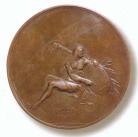
ANNIVERSARIES OF ST. PETERSBURG. St. Petersburg's first anniversary celebration (the city's centenary) took place in 1803. Celebrations started on the morning of 16 May 1803
|
|
|
|
|
hidden
|
Cemeteries (entry)
CEMETERIES. Even before the foundation of St. Petersburg there were several necropolises on the location of the future city: the records of the beginning of the 18th century indicate a Finnish-Swedish cemetery at Elagin (Aptekarsky) Island
|
|
|
|
|
hidden
|
February Revolution of 1917
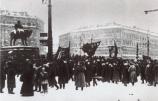
FEBRUARY REVOLUTION OF 1917 is the Second Russian Revolution, which dethroned the Monarchy. Decisive events developed in Petrograd. On 23 February (8 March) 1917
|
|
|
|
|
hidden
|
Fomin I. A. (1872-1936), architect
FOMIN Ivan Alexandrovich (1872-1936), architect, graphic artist, historian and theorist of architecture. I.I. Fomin's father. Graduated from the Academy of Fine Arts (1909), L.N
|
|
|
|
|
hidden
|
Funeral Rites (entry)
FUNERAL RITES. Burials during the building of St. Petersburg were noted for their utmost simplicity. As C. Weber (1718) witnessed, "a body wrapped in a coarse bast sack, tightened with ropes, and put on a bier
|
|
|
|
|
hidden
|
Lebyazhy Bridges
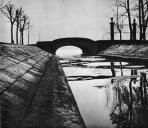
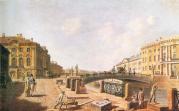
LEBYAZHY BRIDGES, two bridges spanning Lebyazhy Canal. The Nizhne-Lebyazhy Bridge (Lower Lebyazhy Bridge, formerly the first Tsaritsynsky, after Tsaritsyn Medow, see the Field of Mars) is on the Moika River Embankment
|
|
|
|
|
hidden
|
Moika, river
MOIKA (the original name Mya; known as Muya until the early 18th century, derived from the Izhora word for "slush, mire"), a river in the Neva river delta. The Moika River is 4.67 kilometres long, with a width of up to 40 metres
|
|
|
|
|
hidden
|
Monumental Propoganda Plan (monuments)
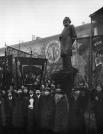
MONUMENTAL PROPAGANDA PLAN was ratified on 12 April 1918 by the Council of People's Commissars decree on the "removal of monuments, erected in honour of tsars and their servants and the elaboration of monuments of Russian Socialist Revolution" (On
|
|
|
|
|
hidden
|
Piskarevskoe Memorial Cemetrey
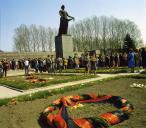
PISKAREVSKOE MEMORIAL CEMETREY (72 Nepokorennykh Avenue), the main site of mass burials of Leningrad residents who starved to death or perished during the siege of 1941-44
|
|
|
|
|
hidden
|
Popular Carnivals
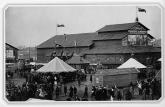
POPULAR CARNIVALS, one of the forms of mass popular entertainment. In the 18th- 19th centuries up to 30 carnivals were arranged in St. Petersburg annually. Representatives of all the estates and even members of the royal family took part in them
|
|
|
|
|
hidden
|
Uritsky M.S. (1873-1918), revolutionary, statesman
URITSKY Moisey Solomonovich (1873-1918, Petrograd), statesman. He graduated from the faculty of law of Kiev University (1897). After the split of Russian Social-Democratic Workers' Party (1903) he joined Mensheviks
|
|
|
|
|
|
hidden
|
|