The subject index
/
Winter Palace
hidden
|
Admiralteyskaya Side
ADMIRALTEYSKAYA SIDE, a historical name of the central part of St. Petersburg bound on the north by the Neva river and on the south by the Moika River. Formed in the early 18th century when the General Admiralty
|
|
|
|
|
hidden
|
Alexander II , Emperor (1818-1881)
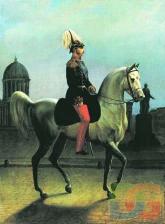
ALEXANDER II (1818-1881, St. Petersburg), Emperor (since 1855). He was a son of Emperor Nicholas I and Empress Alexandra Fedorovna. Tsarevitch (from 1831), General of Infantry (1847), Honorary Member of the Petersburg Academy of Sciences (1826)
|
|
|
|
|
hidden
|
Alexandra Fedorovna, Empress (1872-1918)
ALEXANDRA FEDOROVNA (1872-1918), Empress (from 1894). Nee Victoria Alix Helena Brigitte Louise Beatrice, Princess of Hessen-Darmstadt. Wife of Emperor Nicholas II (from 1894)
|
|
|
|
|
hidden
|
All-Russian Congress of Workers' and Soldiers' Soviet Deputies, Second
THE SECOND ALL-RUSSIAN CONGRESS OF WORKERS' AND SOLDIERS' SOVIET DEPUTIES, was held at Smolny from 25 to 27 October (7 to 9 November) 1917. Its sitting was delayed on several occasions; from the middle of September until 20 October (2 November)
|
|
|
|
|
hidden
|
All-Russian Pushkin Museum
ALL-RUSSIAN PUSHKIN MUSEUM of the Ministry of Culture of the Russian Federation (12 Moika RiverEmbankment) was established in 1953 on the basis of the All-Russian Pushkin Exhibition of 1937 opened in Moscow in the halls of the History Museum in
|
|
|
|
|
hidden
|
Amber Room
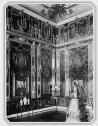
AMBER ROOM, a unique interior of the Great Catherine Palace, and 18th century arts and crafts monument. The walls of the Amber Room are decorated with the amber panels (the only example of amber used in Russian architecture)
|
|
|
|
|
hidden
|
Anniversaries of Petersburg (centenary, bicentenary, two hundred fiftieth anniversary, tercentenary)
ANNIVERSARIES OF ST. PETERSBURG. St. Petersburg's first anniversary celebration (the city's centenary) took place in 1803. Celebrations started on the morning of 16 May 1803
|
|
|
|
|
hidden
|
Antonov-Ovseenko V.A. (1883-1939), revolutionary, political figure
ANTONOV-OVSEENKO (real name Ovseenko) Vladimir Alexeevich (1883-1938), revolutionary. Studied at Nikolaevsky Military Engineering school of St. Petersburg, in 1901 was sacked for his refusal to swear loyalty
|
|
|
|
|
hidden
|
Archaeological Committee
ARCHAEOLOGICAL COMMITTEE, an organisation and research centre of archaeology in Russia. It was founded in St. Petersburg in 1859 under the Ministry of the Imperial Court and Apanages, meetings were held in the Winter Palace
|
|
|
|
|
hidden
|
Aurora, cruiser
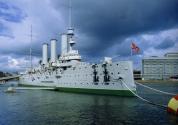
AURORA first rank cruiser was founded in 1897 at the New Admiralty dockyard, and became part of the Baltic Fleet in 1903. It weighed over 6,700 tons (in 1917 - 7
|
|
|
|
|
hidden
|
Bazen P.P.(D.), (1786-1838), architectural engineer
BAZEN (Bazaine) Peter Petrovich (Pierre Dominiq) (1786-1838), architectural engineer, mechanic, mathematician, pedagogue, fellow (1817) and honorary member (1827) of the St. Petersburg Academy of Science, lieutenant general (1830)
|
|
|
|
|
hidden
|
Brenna V.F. (1745-1819), architect
BRENNA Vikenty Franzevich (1745-1819 or 1820?), architect, decorative artist, a representative of Neoclassicism. Native of Italy. Prior to his coming to Russia, he worked in Rome and Warsaw
|
|
|
|
|
hidden
|
Bryullov A.P. (1798-1877), architect
BRYULLOV Alexander Pavlovich (1798 - 1877, St. Petersburg), architect, aquarellist, architecture theorist, specialist in construction technique. Brother of K. P. Bryullov
|
|
|
|
|
hidden
|
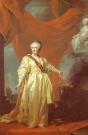
Catherine II (1729-1796), Empress
Catherine II (1729-1796, St. Petersburg), Empress (from 1761), wife of Emperor Peter III (1745). Nee Sophie Augusta Frederica of Anhalt-Zerbst. Lived in St. Petersburg from 1744, coming to power by dethroning her husband (1762)
|
|
|
|
|
hidden
|
Chancellery, His Imperial Majesty's Personal
CHANCELLERY, HIS IMPERIAL MAJESTY'S Personal, a supreme public institution. The Chancellery consisted of several divisions, which were established during the first half of the 19th century to carry out the Sovereign's personal supervision over
|
|
|
|
|
hidden
|
Church of the Holy Sign
CHURCH OF THE HOLY SIGN in Tsarskoe Selo (2a Sadovaya Street, Pushkin), an architectural monument in the Baroque style of the reign of Anna Ioannovna. It was built according to the plans of architect M. G. Zemtsov with the assistance of I. Y
|
|
|
|
|
hidden
|
Clark Matthew (1776-1846), metallurgical engineer
CLARK Matvey Egorovich (Matthew) (1776-1846), metallurgical engineer, Chief Hunt Master. A native of Scotland, he served as inspector at St. Petersburg Iron Foundry (today, Kirovsky Plant) in 1824 and director of Alexandrovsky Foundry (today
|
|
|
|
|
hidden
|
Decembrist Revolt of 1825
DECEMBRIST REVOLT OF 1825, the first overt armed revolt against autocracy and the ownership of serfs in Russia. It was prepared by the Northern Decembrist Society
|
|
|
|
|
hidden
|
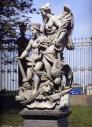
Decorative Monumental Sculpture (entry)
DECORATIVE MONUMENTAL SCULPTURE. The art of monumental sculpture dates back to the time of Peter the Great; its first examples appeared throughout St. Petersburg, at the Summer Garden and various suburb residences
|
|
|
|
|
hidden
|
Deviatogo Yanvarya Children Park
DEVIATOGO YANVARYA CHILDREN PARK (20 Stachek Avenue) is located between Shvetsov Street, Marshal Govorov Street, Tikhomirskaya Street and Stachek Avenue. It consists of 10
|
|
|
|
|
hidden
|
Dvortsovaya Embankment
DVORTSOVAYA EMBANKMENT (Palace Embankment), called Verkhnaya Naberezhnaya Street or First Verkhnaya Embankment beginning in 1738; in the 1740s-90s, it was known as Millionnaya Embankment; from 1923 to 1944 it was called Devyatogo Yanvarya Embankment
|
|
|
|
|
hidden
|
Dvortsovy Bridge
DVORTSOVY BRIDGE (1918-52 Republican Bridge, in honour of the Soviet Republic), across the Bolshaya Neva, joining Dvortsovy Passage with Birzhevaya (Stock Market) Square. Named after the Winter Palace
|
|
|
|
|
hidden
|
Efimov N.E. (1799-1851), architect.
EFIMOV Nikolay Efimovich (1799-1851, St. Petersburg), architect, urban planner. From 1806 to 1821, he studied at the St. Petersburg Academy of Fine Arts; was later involved in studying traditional Russian architecture. In 1827-40, he lived in Italy
|
|
|
|
|
hidden
|
Electrical Power Supply
ELECTRICAL POWER SUPPLY. Prototype electrical torches in St. Petersburg were lit in 1873 on Odesskaya Street. Twelve electrical torches designed by P.N. Yablochkov were installed in 1879 for the lighting of Liteiny Bridge
|
|
|
|
|
hidden
|
Elizaveta (Elizabeth) Petrovna (1709-1761), Empress
ELIZAVETA (Elizabeth) PETROVNA (1709-1761, St. Petersburg), Empress (since 1741), daughter of Peter the Great and Elizaveta I. Before taking the throne, she lived in a palace at the Tsaritsyn Medow in St
|
|
|
|
|
hidden
|
Felten Y. M. (1730-1801), architect
FELTEN Yury Matveevich (Georg Friedrich) (1730 -1801, St. Petersburg), architect, professor of the Academy of Fine Arts (from 1775; from 1785 a Council member, in 1789-94 director), State Counsellor (1784)
|
|
|
|
|
hidden
|
Finlyandsky Life Guards Regiment
FINLYANDSKY LIFE-GUARDS REGIMENT, was raised in December 1806 in Strelna and Peterhof as the Imperial Militia Battalion (recruited from state and court serfs, predominantly of the Finnish origin, hence the name). On 22.1
|
|
|
|
|
hidden
|
Fires (entry)
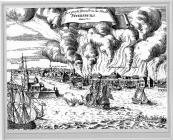
FIRES. Especially common in the first years of St. Petersburg's existence. The first large fire happened in 1710 on Troitskaya Square. A prohibition against constructing wooden houses within city limits was issued in 1727
|
|
|
|
|
hidden
|
First of March, 1881
FIRST OF MARCH 1881, the day Emperor Alexander II was assassinated, prepared and accomplished by the party People's Will. The plan included exploding the Emperor's carriage on its way to the Mikhailovsky Manege
|
|
|
|
|
hidden
|
Fonvizin D.I. (1744/45-1792), writer
FONVIZIN (von Vizin) Denis Ivanovich (1744 or 1745 - 1792, St. Petersburg), writer, fellow of Russian Academy (1783). He was educated at a gymnasia attached to Moscow University (1755-62). His first visit to St. Petersburg dates back to 1759-60
|
|
|
|
|