Статьи
/
Бубнову И. Г., мемориальная доска
hidden
|
Blumentrost L. L. (1692-1755), court physician, first President of the Petersburg Academy of Science
BLUMENTROST Lavrenty Lavrentievich (1692-1755, St. Petersburg), court physician, first President of the Petersburg Academy of Sciences. He studied at the Universities of Halle, Oxford, and Leiden and earned the degree of Doctor of Medicine (1713)
|
|
|
|
|
hidden
|
Cemeteries (entry)
CEMETERIES. Even before the foundation of St. Petersburg there were several necropolises on the location of the future city: the records of the beginning of the 18th century indicate a Finnish-Swedish cemetery at Elagin (Aptekarsky) Island
|
|
|
|
|
hidden
|
City Archaeology
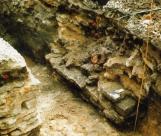
CITY ARCHAEOLOGY. A branch of archaeological research, developed in St. Petersburg (Leningrad) from the middle of the 20th century. Archaeological research in the city started with archaeological excavations conducted in 1952 by archaeologist A.D
|
|
|
|
|
hidden
|
Eropkin P.M. (about 1698-1740), architect.
EROPKIN Peter Mikhailovich (about 1698-1740, St. Petersburg), architect, urban planner, architecture theorist. In 1716-24 on the order of the Tsar Peter the Great he was trained in Italy, in 1725 he was conferred a title of architect
|
|
|
|
|
hidden
|
Great Northern War of 1700-21
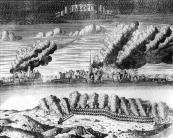
GREAT NORTHERN WAR OF 1700-21 was the war declared by a coalition of states from Central and Eastern Europe (the main participants were Russia, Denmark and Saxony) against Sweden
|
|
|
|
|
hidden
|
Opekushin A.M., (1838-1923), sculptor
Opekushin Alexander Mikhailovich (1838-1923), sculptor. Studied at the Drawing School of the Society of Art Promotion and in the workshop of sculptor D.I. Jensen. Was a full member of Academy of Arts (1895)
|
|
|
|
|
hidden
|
Saltykov V.F. Chief of police General in 1734-42
SALTYKOV Vasily Fedorovich (1675-1751), statesman, general en chef (1741), adjutant-general (1734). He served at Preobrazhensky Life Guards Regiment. In 1732-42 Petersburg Chief of Police General
|
|
|
|
|
hidden
|
Sampsonievsky Bolshoy Avenue
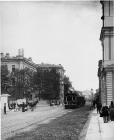
SAMPSONIEVSKY BOLSHOY AVENUE, named Samsonievskaya Street in 1739, then B. Samsonievsky Avenue in the early 19th century, receiving its present name in the late 19th century
|
|
|
|
|
hidden
|
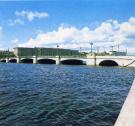
Sampsonievsky Bridge
SAMPSONIEVSKY BRIDGE, (in 1918-1998 known as Svobody Bridge, Bridge of Freedom), over the Bolshaya Nevka, linking Kuybysheva Street and Finlandsky Avenue. The bridge was named after St. Sampson’s Cathedral
|
|
|
|
|
hidden
|
Volynsky A.P. (1689-1740), statesman
VOLYNSKY Artemy Petrovich (1689-1740, St Petersburg), statesman, Chief Master of the Hunt (1736). He was married to Peter the Great's cousin, A.L. Naryshkina. Started his career in the Vladimirsky Dragoon Regiment (1708)
|
|
|
|
|
hidden
|
Vyborgskaya Side
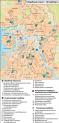
VYBORGSKAYA SIDE, a historical district of St. Petersburg, on the right bank of the Neva River and the Bolshaya Nevka River. In the east, it is confined by the Chernaya Rechka River
|
|
|
|
|
hidden
|
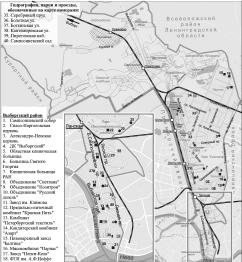
Vyborgsky District
VYBORGSKY DISTRICT is an administrative territorial unit of St. Petersburg. (Its territory administration is located at 86 Bolshoy Sampsonievsky Avenue) The district was founded in 1917; and its present-day territorial borders were established in
|
|
|
|
|
hidden
|
Zemtsov M.G. (1688-1743), architect.
ZEMTSOV Mikhail Grigoryevich (1688-1743, St. Petersburg), architect, graphic artist, theorist of architecture, representative of the early Baroque. He studied at the Armoury Printing House School in Moscow. He worked in St
|
|
|
|
|
|
hidden
|
|
hidden
|
|
hidden
|
|
hidden
|
|
hidden
|
|
hidden
|
|
hidden
|
|
hidden
|
|
hidden
|
|
hidden
|
|
hidden
|