The subject index
/
Preobrazhensky Life Guards Regiment
hidden
|
Alexander III, Emperor (1845-1894)
ALEXANDER III (1845, St. Petersburg — 1894), Emperor (since 1881). Second son of Emperor Alexander II and Empress Maria Alexandrovna. From 1865, he was heir to the throne and Tsarevitch. He married the Dutch princess, Dagmar (see Maria Fedorovna)
|
|
|
|
|
hidden
|
Arakcheev A.A. (1769-1834), statesman
ARAKCHEEV Alexey Andreevich (1769-1834), count (1799), statesman and military commander, artillery general (1807). Graduated from the Artillery Engineering Gentry Cadet Corps in St
|
|
|
|
|
hidden
|
Arkharov N.P., Governor General in 1795-97
ARKHAROV Nikolay Petrovich (1740-1814), statesman, Infantry General (1796). In 1755 he was enlisted in Preobrazhensky Life Guard Regiment. In 1772-82, he was Moscow Chief Policeman, in 1782-84, he was Moscow Civil Governor, in 1784-96
|
|
|
|
|
hidden
|
Assignment of Recruits
ASSIGNMENT OF RECRUITS, ceremony of assignment of recruits to guards regiments, introduced by emperor Nicholas I, was held annually 4-6 times during autumn in the Mikhailovsky Manege (Riding Academy) personally by the Emperor or guards corps
|
|
|
|
|
hidden
|
Derzhavin G.R. (1743-1816), poet, statesman
DERZHAVIN Gavriil Romanovich (1743-1816), poet and statesman, Full Privy Counsellor (1800). Received his primary education at the Kazan Gymnasium. Lived in St. Petersburg. From 1762, though intermittently
|
|
|
|
|
hidden
|
February Revolution of 1917
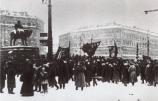
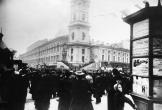
FEBRUARY REVOLUTION OF 1917 is the Second Russian Revolution, which dethroned the Monarchy. Decisive events developed in Petrograd. On 23 February (8 March) 1917
|
|
|
|
|
hidden
|
Furshtatskaya Street
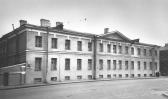
FURSHTATSKAYA STREET, from Liteiny Avenue to Potemkinskaya Street. The street was laid in the 18th century next to Liteiny Court and named Third Artilleryskaya Street, to adopt the name Furshtatskaya (Furshtadtskaya) Street in 1806 only
|
|
|
|
|
hidden
|
Guards
GUARDS, life guards, elite, privileged military unit. The Russian Guards were established by Peter I in 1700, when the Preobrazhensky and Semenovsky regiments gained the title of life guards
|
|
|
|
|
hidden
|
Guards' Case
GUARDS' CASE (Spring case), one from the series of cases fabricated by the Joint State Political Administration Board against former officers of Imperial and White Armies
|
|
|
|
|
hidden
|
Holy Transfiguration Cathedral
HOLY TRANSFIGURATION CATHEDRAL, located at 1 Preobrazhenskaya Square. An architectural monument construction by order of Empress Elizaveta Petrovna (architect M. G
|
|
|
|
|
hidden
|
Izmaylovsky Life Guards Regiment
IZMAYLOVSKY LIFE GUARDS REGIMENT, third in seniority (after Preobrazhensky and Semenovsky) of infantry regiments in the Russian guards. Formed by a decree of Empress Anna Ioannovna in 1730 in Moscow
|
|
|
|
|
hidden
|
Kokoshkin S.A. (1795-1861), Chief Policeman
KOKOSHKIN Sergey Alexandrovich (1795 or 1796-1861, St. Petersburg), statesman, Infantry General (1856). From 1811, he served in the Preobrazhensky Guard Regiment and from 1828 he was an assistant to the chief of staff of military settlements
|
|
|
|
|
hidden
|
Konstantin Konstantinovich, (1858-1915), Grand Prince
KONSTANTIN KONSTANTINOVICH (1858, Strelna - 1915, Pavlovsk), Grand Prince, Infantry General (1907), Adjutant General (1901), honorary member of the St. Petersburg Academy of Sciences (1900). Son of Grand Prince Konstantin Nikolaevich
|
|
|
|
|
hidden
|
Life Company
LIFE COMPANY, a separate extra-privileged guard unit. Ordered by Empress Elizaveta Petrovna in 1741, formed of the Grenadier Company of the Preobrazhensky Life Guard Regiment. The company assisted her seizure of the throne on 25 November 1741
|
|
|
|
|
hidden
|
Marata Street
MARATA STREET (in the 18th century - Preobrazhenskaya Polkovaya Street, in the first half of the 19th century - Gryaznaya Street, in 1855-1918 - Nikolaevskaya Street after Emperor Nicholas I), between Nevsky Prospect and Podiezdnoy Lane
|
|
|
|
|
hidden
|
Military Churches (entry)
MILITARY CHURCHES, churches attached to military units, emerged parallelly with the foundation of the city, set up as field churches in regimental settlements - garrison, infantry and guards quarters
|
|
|
|
|
hidden
|
Moscow Life Guards Regiment
MOSCOW LIFE GUARDS REGIMENT, infantry guards regiment, formed in 1811 out of the 1st Life Guards Battalion of Preobrazhensky Regiment as the Life-Guards Litovsky (Lithuanian) Regiment, in 1817 named the Moscow (Moskovsky) Life-guards Regiment
|
|
|
|
|
hidden
|
Moskovskaya Side
MOSKOVSKAYA Side, the 18th century name of the territory on the left bank of the Neva River to the east and south-east from the Fontanka River, that was populated with labourers, brought from Moscow in the early 18th century (hence the name)
|
|
|
|
|
hidden
|
Mussorgsky М.P., (1839-1881), composer
MUSSORGSKY Modest Petrovich (1839-1881, St. Petersburg), composer. Lived in St. Petersburg from 1849, he studied at St. Petrischule and the Guards and Cavalry Cadets College in 1852-56, situated at the present-day 54 Lermontovsky Avenue
|
|
|
|
|
hidden
|
Nicholas II, the Emperor (1868-1918)
Nicholas II (1868, Tsarskoe Selo - 1918), Emperor from 1894 to 1917. Son of Emperor Alexander III and Empress Maria Fedorovna. Married Princess of Hesse-Darmstadt, who took the name of Alexandra Fedorovna
|
|
|
|
|
hidden
|
Obolensky A.N., chief of the city administration in 1914-16
OBOLENSKY Alexander Nikolaevich (1874, St. Petersburg - 1924), prince, statesman, Major-General (1914). He was educated in Page Corps school, in 1891-1906 served in Preobrazhensky Life Guards Regiment
|
|
|
|
|
hidden
|
Officers Houses (entry)
OFFICERS HOUSES, officers houses were stone tenement houses (second half of the 19th - beginning of the 20th centuries), where apartments were rented at low rates solely to the officers rendering military service in one of the garrison's regiments
|
|
|
|
|
hidden
|
Pestelya Street
PESTELYA STREET known as Panteleimonovskaya Street until 1923, between Fontanka River Embankment and Radishcheva Square. The street was named after P. I. Pestel
|
|
|
|
|
hidden
|
Platz - Drill Grounds (entry)
PLATZ (from German "Platz" - square) is a large and flat area (squares, waste grounds) for drills and army training. The first platz (drill square) in St. Petersburg was Mars Field
|
|
|
|
|
hidden
|
Regiment Settlements (entry)
REGIMENT SETTLEMENTS are places for compact billets of guard regiments inside the city limits in the 18th - early 19th century. They were built in 1739-43 under regular designs specially provided for this purpose (usually the planning included an
|
|
|
|
|
hidden
|
Revolution of 1905-07
REVOLUTION OF 1905-07. The first people's bourgeois-democratic revolution in Russia. Caused by socioeconomic contradictions and the country's political development following the reforms of 1860s-70s
|
|
|
|
|
hidden
|
Ryleeva Street
RYLEEVA STREET (until 1923 - Spasskaya Street), located between Radishcheva Square and Radishcheva Street. The first name comes from the Holy Transfiguration All Guards Cathedral. The street was renamed after K.F. Ryleev
|
|
|
|
|
hidden
|
Saltykov V.F. Chief of police General in 1734-42
SALTYKOV Vasily Fedorovich (1675-1751), statesman, general en chef (1741), adjutant-general (1734). He served at Preobrazhensky Life Guards Regiment. In 1732-42 Petersburg Chief of Police General
|
|
|
|
|
hidden
|
Semenovsky Life Guards Regiment
SEMENOVSKY LIFE GUARDS REGIMENT, one of the two oldest infantry guards regiments (along with Preobrazhensky Life Guards Regiment), its history dates back to 1683 (from "poteshny (toy, amusement) regiments" of Tsar Peter the Great)
|
|
|
|
|
hidden
|
Suvorov A.V.(1729-1800), military commander
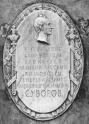
SUVOROV Alexander Vasilyevich (1729-1800, St. Petersburg), military leader, Count of Rymnik (1789), Prince of Italy (1799), Generalissimo (1799). Received home education
|
|
|
|
|