Возврат на главную страницу Возврат на главную страницу Возврат на главную страницу Возврат на главную страницу Возврат на главную страницу
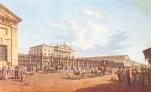
The Moscow Gate

The gate symbolizes the victory of the Russian army in the wars against Turkey and Persia in 1828-1830. This Empire style gate built in 1831 was designed by Russian architect V.M. Gornostayev

The Moscow Gate (Pushkin Town)

The Moscow Gate, representing two stone guardhouses with gate folds between them, was constructed in 1830-1831. Facades of the guardhouses was decorated in the Empire style. Ya. V
Source: Tsarskoe Selo

The Nicholas Man Gymnasium. The memorial plaque to I.F. Annensky.

A part of the area of the closed Wall-paper Factory with a stone barrack for workers, belonged to the Banknote Factory since 1780, was given for building a public almshouse according to the Emperor’s order in 1859
Source: Tsarskoe Selo

The Nusery School of Her Majesty Empress Alexandra Fiodorovna in the Babolovsky Park.

In 1903 Empress Alexandra Fiodorovna granted the plot located in the Babolovsky Park between Gatchina Road and Baursky Channel for building a Nusery School founded by her
Source: Tsarskoe Selo

The Obelisk in Commemoration of Graduates

The Obelisk in commemoration of graduates of the Pushkin Radio Engineering Academy of the Air Defense Forces (currently the Military Institute of Combat Support Systems and Facilities of the A.F

The Officer Artillery School

The Officer Artillery School was established on March 14, 1882. Artillery battery commanders were trained there. The school occupied large territory in Sophia bordered by Kadetsky Boulevard, Srtilleriyskaya and Sapernaya Streets

The Orderly Stables.

The monumental building of the Orderly Stables (8 Sadovaya Street) was built in 1822-1824 by the architect S.L. Shustov according to the design of V.P. Stasov for placing the own imperial stables of Alexander I
Source: Tsarskoe Selo

The Orlov (Gatchina) Gate

A grand 15 meters high arch is situated at the southern border of the Catherine Park not far from the Ruin Tower. A road to Gatchina, a former estate of Count G.G

The Orlov Water Tower.

The Orlov Water Tower was built according to the design of architect A.F. Vidov in 1887 in the outlying district of the Babolovsky Park, it was one of two historic water-lifting buildings of Tsarskoye Selo
Source: Tsarskoe Selo

The Palace Church of the Resurrection

In the Tsarskoye Selo Palace of Tsarina Catherine Alexeyevna at first there was an camp private chapel of St. Catherine the Great Martyr. The main sight of this church was a carved iconostasis of dark blue colour
Source: Tsarskoe Selo

The Palace of Countess O.V. Gogenfelsen Princess Paley

In 1910 Countess O.V. Gogenfelsen, the wife of Grand Duke Paul Alexandrovich, bought a luxurious country house in Pashkov Lane. Among former owners there was State Councilor I.D
Source: Tsarskoe Selo

The Palace Power Electric Station.

The Palace Power Electric Station complex including the main building, service wing, fence and the historic support of electricity supply network was constructed in 1896-1898 to the design of the architect S.A
Source: Tsarskoe Selo

The Pensioners’ Stables (an ensemble of the Alexander Park)

A path of the Alexander Park to ponds on the Kuzminka River has led to the Pensioners’ Stables, a Gothic park building hidden in trees thicket. The pavilion was built by Menelaws in 1827-1829 and intended for eight horses which were used by the
Source: Tsarskoe Selo

The Pevchesky Water Tower

The building with thirty-metre tower intended for a water-lifting and electric power station was built in 1887 to the design of A.F. Vidov. The building was named after the name of former Pevchesky (now – Litseysky) Lane
Source: Tsarskoe Selo

The Physiology of Petersburg, miscellany, 1845

THE PHYSIOLOGY OF PETERSBURG, parts 1 and 2, 1845, St. Petersburg, collected sketches, compiled of works of noted Russian writers under Nikolay Nekrasov's editorship in bookseller A. Ivanov's publishing-house

The Private Garden (an ensemble of the Catherine Park)

The Private Garden of Catherine II at the Tsarskoye Selo Palace was laid out by V.I. Neyelov and D. Busch in the 1770s. Catherine II called this part of the park
Source: Tsarskoe Selo

The Pulkovo Border-Line

Fierce fighting with the Nazi army heading for Leningrad raged at the Pulkovo border-line in September of 1941. A monumental stele rises over a flat ground. It is surrounded with mosaic panels illustrating the life in the city beleaguered by the

The Pyramidal Hill

The pyramidal hill with a gun rises over the former strong point of the Soviet army at the Pushkin-Kolpino Highway. A reinforced concrete beam with the inscription “This was the main line of Leningrad defense in 1941-1944” is mounted into a hill

The Red (Turkish) Cascade (an ensemble of the Catherine Palace)

The sign of the cascade is two round narrowed upwards Gothic towers with red brick facades. Lancet windows, narrow slit-embrasures, merlon parapets give to the cascade the appearance of the fortress construction
Source: Tsarskoe Selo

The Ruin Tower

The Ruin Tower is an unusual decorative structure commemorating the victory of Russia over the Ottoman Porte. The inscription on the saddle stone reads: “This stone is placed in 1768 for the memory of the was declared by the Turks on Russia”

The Russian Assembly , political organization

The RUSSIAN ASSEMBLY was a monarchical organization. It appeared in the beginning of October 1900 as a circle of top St. Petersburg officials and representatives of intelligentsia, adherents of the Russian style in life of the society. A.S

The Saint Ecatherine Cathedral

The five-domed Saint Catherine of Alexandria Cathedral in Tsarskoye Selo was constructed in the style of Suzdal Cathedrals. It was designed by architect Konstantin Ton. The construction began in 1835 by order of Emperor Nikolay the First

The Saint Sophia Cathedral

The cathedral was built in commemoration of our victories in the Russo-Turkish wars. The foundation stone of the cathedral was laid in the presence of Catherine II on July 30, 1782. The consecration took place on May 20, 1788

The Sign in Commemoration of the 60th Anniversary of the Victory

The sign in commemoration of the 60th anniversary of the Victory and in honor of the residents of Pushkin who took part in the Great Patriotic War and were awarded the title of the Hero of the Soviet Union

The Small Caprice (an ensemble of the Catherine Park)

The Small Caprice like the Great Caprice has the decorative and utilitarian function, it connects the Catherine and Alexander parks. Such kinds of constructions were necessary for constructing a convenient way from a part of the Tsarskoye Selo Park
Source: Tsarskoe Selo

The Small Farm of Grand Duchess Maria Alexandrovna (an ensemble of the Catherine Park)

Emperor Alexander II ordered to build different entertaining constructions for his children near his apartments in the Catherine Palace. The most famous construction was the Small Farm of Grand Duchess Maria Alexandrovna
Source: Tsarskoe Selo

The Sovereign Military Chamber

The Sovereign Military Chamber was built not far from the Anichkov Palace by architect S.Y. Sidorchuk in 1913 – 1916 by order of Nikolay II. The building was constructed after the fashion of ancient chambers of Pskov-and-Novgorod stone architecture

The Storm

(the 30th kilometer of the Moscow Highway) A 12 meters high granite obelisk rises over the 30th kilometer of the Moscow Highway. It resembles a triangular-shaped bayonet

The Taitsi water supply system

The Taitsi water supply system (TW) was the water supply system of Tsarskoye Selo built according to the order of Catherine II in 1772-1787 in exchange for the outweared Vittelevo water supply system. The military engineer F.V

The Tirkish Bath pavilion (an ensemble of the Catherine Park)

The East architecture touches and the name of the Turkish Bath pavilion, occupying the foreground in the Great Pond panorama, remember about the Adrianople Peace treaty with Turkey in 1829
Source: Tsarskoe Selo