hidden
|
Vorontsov Family
VORONTSOV, a famous noble and princely family from the early 16th century. Several of them were closely associated with St. Petersburg. Mikhail Illarionovich Vorontsov (1714-67) was a count (1744), statesman, diplomat
|
|
|
|
|
hidden
|
Vorontsov Palace
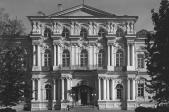
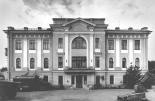
VORONTSOV'S PALACE (26 Sadovaya Street), monument of Baroque architecture. Built in 1749-57 (architect F. Rastrelli) for Count M.I. Vorontsov (see Vorontsov Family)
|
|
|
|
|
hidden
|
Voronya Mountain
VORONYA MOUNTAIN, a peak to the south of St. Petersburg in the vicinity of Krasnoe Selo village, one of the highest points of the Duderhof Heights (147 meters above the sea level); it overlooks the surroundings with the elevation of approximately
|
|
|
|
|
hidden
|
Voroshilov K.E. (1881-1969), statesman, marshal
VOROSHILOV Kliment Efremovich (1881-1969), Soviet statesman and military officer, Marshal of the Soviet Union (1935), Hero of the Soviet Union (1956, 1968), Hero of Socialist Labour (1960)
|
|
|
|
|
hidden
|
Voskresensky Canal
VOSKRESENSKY CANAL (The Inzhenernaya Channel) was dug during the construction of Mikhailovsky Castle along its southern facade in 1797-1800. It flew from the Fontanka River through the ponds of Mikhailovsky Garden and drained into the Moika River
|
|
|
|
|
hidden
|
Voskresensky I. N. (1862-1943), manager of Izhorsky Plants
VOSKRESENSKY Ivan Nikanorovich (1862-1943), shipbuilder, Lieutenant General in 1913, Professor from 1937, honoured scientist and engineer of the Russian Soviet Federative Socialist Republic in 1942
|
|
|
|
|
hidden
|
Vosstaniya Square
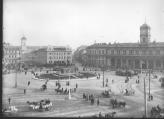
VOSSTANIYA SQUARE (translated as Uprising Square) known as Znamenskaya Square until 1918 lies at the intersection of Nevsky Prospect and Ligovsky Avenue. The first name translated as Holy Sign Square originated from the Holy Sign Church
|
|
|
|
|
hidden
|
Vosstaniya Street
VOSSTANIYA STREET known as Znamenskaya (Holy Sign) Street until 1923, named after the Holy Sign Church. The street runs between Nevsky Prospect and Kirochnaya Street. The present-day name is in memory of the February Revolution of 1917
|
|
|
|
|
hidden
|
Vostokov A.H. (1781-1864), philologist
VOSTOKOV Alexander Hristoforovich (real name Ostenek Alexander Voldemar) (1781-1864, St. Petersburg), philologist, paleographer, poet, translator, Member of the Russian Academy (1820), corresponding member (1826) and since 1841 member of St
|
|
|
|
|
hidden
|
Votes
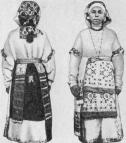
VOTES, an ethnic group descendent from the ancient population of of Votia in Ingria. The Votic language is related to the Finno-Ugric group of the Uralic language group and is close to Estonian
|
|
|
|
|
hidden
|
Votic Fifth
VOTIC FIFTH (Vodskaya Pyatina), one of five administrative-territorial entities of Novgorod Land, which were subdivided into principalities, regions and districts
|
|
|
|
|
hidden
|
Voting Stations
VOTING STATIONS are locations where votes are cast and counted in elections of various officials. There is one voting station per 3,000 voters. In St. Petersburg there are about 1800 voting stations
|
|
|
|
|
hidden
|
Voyachek V.I. (1876-1971), member of the Academy of Medical Sciences
VOYACHEK Vladimir Ignatievich (1876, St. Petersburg - 1971, Leningrad), otolaryngologist, member of the Academy of Medical Sciences of the USSR from 1944, Lieutenant General of the Medical Corps in 1943, Hero of Socialist Labour in 1961
|
|
|
|
|
hidden
|
Vozdukhoplavatelny Park
VOZDUKHOPLAVATELNY PARK (Aerostatic Park), the historical name of the territory to the south-west of Volkovaya Village, near the railway station of the same name
|
|
|
|
|
hidden
|
Voznesensky Avenue
VOZNESENSKY AVENUE, translated as Ascension Avenue, between Admiralteisky Avenue and Fontanka River Embankment. It was laid in the early 18th century. It runs towards the tower of the Main Admiralty and crosses St Isaac’s Square
|
|
|
|
|
hidden
|
Voznesensky Bridge
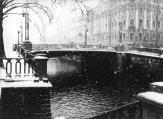
VOZNESENSKY BRIDGE, across Griboedov Canal, along the route of Voznesensky Avenue (hence the name). In 1735, there was a wooden bridge here. In the 1780s it was replaced with a single span wooden beam bridge (later with a nogging-strut framed)
|
|
|
|
|
hidden
|
Vremya (The Time), journal
VREMYA (The Time), a monthly literary and political journal, was published by М. М. and F. М. Dostoevsky in 1861-63, and printed in E. Prats' printing house. The editorial office was housed in M.M
|
|
|
|
|
hidden
|
Vrubel М.А., (1856-1910), painter
VRUBEL Mikhail Alexandrovich (1856-1910, St. Petersburg), painter. From childhood lived in St. Petersburg with his family. He visited the Drawing School of the Society for Encouragement of Arts in 1864 and 1868-69
|
|
|
|
|
hidden
|
Vsyakaya Vsyachina (All Sorts and Sundries), magazine
VSYAKAYA VSYACHINA (All Sorts and Sundries) a daily satiric magazine, came out under Catherine's II actual supervision in 1769-70 (70 issues). In 1770, beginning with the 53 (1) issue, was published as Baryshek Vsyakoy Vsyachiny
|
|
|
|
|
hidden
|
Vvedenskaya Street
VVEDENSKAYA STREET, from Bolshoy Avenue of Petrogradskaya Side to Kronverksky Avenue. The street was known as Second Vvedenskaya Street in the 1730s-90s; from 1923 to 1944 it was called Rozy Luxemburg Street
|
|
|
|
|
hidden
|
Vvedensky A.I. (1904-1941), poet
VVEDENSKY Alexander Ivanovich (1904, St. Petersburg - 1941?), poet, drama writer. In 1921, after graduating from Lentovsky Gymnasium, he entered Law Faculty and then Chinese Department of the Faculty of Oriental Studies of Petersburg University
|
|
|
|
|
hidden
|
Vvedensky Canal
VVEDENSKY CANAL was dug between the Obvodny Canal and the Fontanka River in 1807-10. It received its name from Vvedensky Cathedral (Presentation of the Holy Virgin Cathedral) (at different times it was named Soyedinitelny (Connecting), Novy (New)
|
|
|
|
|
hidden
|
Vyaltseva A.D., (1871-1913), singer
VYALTSEVA (married name Biskupskaya) Anastasiya Dmitrievna (1871-1913, St. Petersburg), operetta and opera (mezzo-soprano) singer, variety actress. Studied singing in St. Petersburg under S. M. Sonki
|
|
|
|
|
hidden
|
Vyazemsky Garden
VYAZEMSKY GARDEN is situated on the Aptekarsky Island, on the left bank of Malaya Nevka River, at the corner of Pesochnaya Embankment and Vyazemsky Lane. It was laid out in the first half of the 19th century around Princes Vyazemsky estate (hence
|
|
|
|
|
hidden
|
Vyazemsky P.A. (1792-1878), poet
VYAZEMSKY Peter Andreevich (1792-1878), duke, poet, literary critic, statesman, full member of the Russian Academy, member of Petersburg Academy of Sciences (1841), member of the State Assembly (from 1866)
|
|
|
|
|
hidden
|
Vyazemsky S.M. (1895-1983, Leningrad), regional ethnographer
VYAZEMSKY Sergey Mikhailovich (1895-1983, Leningrad), collector, regional ethnographer, and historian. He graduated from the Economics Department of Tashkent Institute (1925)
|
|
|
|
|
hidden
|
Vyazmitinov S.K., Governor General 1805-1807; 1816-18
VYAZMITINOV Sergey Kuzmich (1744-1819, St. Petersburg), Count (1818), state and military figure, Infantry General (1798). Entered military service in 1759, participated in the Seven-Year War of 1756-63
|
|
|
|
|
hidden
|
Vyborgskaya Embankment
VYBORGSKAYA EMBANKMENT on the right bank of the Bolshaya Nevka River between Maly Sampsonievsky Avenue and Chernaya Rechka Embankment. The name originated from Vyborgskaya Side in 1887
|
|
|
|
|
hidden
|
Vyborgskaya Side
VYBORGSKAYA SIDE, a historical district of St. Petersburg, on the right bank of the Neva River and the Bolshaya Nevka River. In the east, it is confined by the Chernaya Rechka River
|
|
|
|
|
hidden
|
Vyborgsky District
VYBORGSKY DISTRICT is an administrative territorial unit of St. Petersburg. (Its territory administration is located at 86 Bolshoy Sampsonievsky Avenue) The district was founded in 1917; and its present-day territorial borders were established in
|
|
|
|
|