Persons
/
Mayakovsky Vladimir Vladimirovich
writer
hidden
|
Mayakovsky V.V. (1893-1930), poet
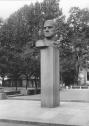
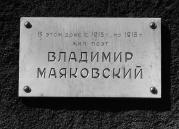
MAYAKOVSKY Vladimir Vladimirovich (1893-1930), poet. Studied at Kutais Gymnasium and in the Moscow School for Painting, Sculpture and Architecture. He visited St
|
|
|
|
|
hidden
|
1918
January. In Tsarskoye Selo, the Town Duma, Zemstvo and Menshevik Soviet were dissolved. N.I. Tatarintsev became the head of the new Bolshevik Soviet, this Soviet was declared as the only power in Tsarskoye Selo.
15 January
|
|
|
Source: Tsarskoe Selo
|
|
hidden
|
Arts, The House of, literary society
Arts, The House of, an organisation for literary figures. It was founded by K. I. Chukovsky, M. Gorky, A. N. Tikhonov. Opened on 19 November 1919 in the former house of the Eliseev family at 15 Nevsky Prospect / 59 Moika River Embankment
|
|
|
|
|
hidden
|
Blok A.A. (1880-1921), poet
BLOK Alexander Alexanderovich (1880, St. Petersburg - 1921, Petrograd), poet. He was born in the house of his grandfather A.N. Beketov (9 Universitetskaya Embankment, the Rector's Building; memorial plaque)
|
|
|
|
|
hidden
|
Bronze Horseman
BRONZE HORSEMAN, the popular name of the monument to Emperor Peter the Great on Dekabristov Square. Originated from Alexander Pushkin's poem of the same name (1833); one of the best known Russian monuments and world monumental sculptures
|
|
|
|
|
hidden
|
Cabaret (entry)
CABARET (from the French word cabaret - small restaurant). At the beginning of the 20th century, it was the name for small, literary and artistic restaurants, places for meetings of poets, musicians, actors, artists and other workers of art
|
|
|
|
|
hidden
|
Chiz and Yezh (Siska and Hedgehog), journals
CHIZH and YEZH (Siska and Hedgehog), children's monthly journals, published by members of Marshak's editorial board (S. Y. Marshak, N. М. Oleynikov, also the journal's editor, Е. L. Schwarz et al.)
|
|
|
|
|
hidden
|
Circus (entry)
CIRCUS. The establishment of circuses in St. Petersburg was preceded by traditional Russian amusements and games where trained animals took part in the fun. In the first years of the city's live bear-baiting (bear comedies) appeared in St
|
|
|
|
|
hidden
|
Demidov Garden
DEMIDOV GARDEN is situated at Ofitserskaya (today Dekabristov) Street; between Pisareva Street and Moika River Embankment. In the early 18th century the lot belonged to Baron P.P
|
|
|
|
|
hidden
|
Drama Theatre (entry)
DRAMA THEATRE. The performances of the theatre of Tsar Peter the Great's sister, Tsarevna Natalia Alexeevna (from 1714) can be considered as the first attempts to establish a standing public theatre in St. Petersburg
|
|
|
|
|
hidden
|
Factory of Eccentricity
FACTORY OF ECCENTRICITY (FEKS), the creative association, existed in Petrograd (Leningrad) in 1922-26. The aesthetic programme of the Factory of Eccentricity stood close to the ideas of the Leftist Arts Front and V. E. Meyerhold’s and V. V
|
|
|
|
|
hidden
|
Grand Hotel Europe
GRAND HOTEL EUROPE (in 1875-1991, Evropeyskaya (European); 7/1 Mikhailovskaya Street; since 1991 Grand Hotel Europe). Opened on 28 January 1875. The building was built in 1873-75 (architect L.F
|
|
|
|
|
hidden
|
Leningrad, journal
LENINGRAD, throughout different periods several journals circulated in the city under this name.1) From 1922 until 1925 - a bi-weekly illustrated literary and political journal (until 1924 was called Petrograd)
|
|
|
|
|
hidden
|
Letopis (The Chronicle), journal
LETOPIS (The Chronicle) monthly literary, scientific and political journal, founded and virtually edited by Maxim Gorky. The journal united authors and publicists opposing nationalism and WW I
|
|
|
|
|
hidden
|
Libraries (entry)
LIBRARIES. The first library of St. Petersburg was founded in 1714 by the decree of Tsar Peter the Great as His Majesty’s Library; later on, it formed the basis of the Library of the Russian Academy of Sciences
|
|
|
|
|
hidden
|
Mayakovskogo Street
MAYAKOVSKOGO STREET, between Nevsky Prospect and Kirochnaya Street. It was built in the first half of the 18th century, and was called Srednyaya Pershpektivaya, in the middle of 19th century - Shestilavochnaya Street
|
|
|
|
|
hidden
|
Mayakovsky Library, central, municipal
MAYAKOVSKY LIBRARY, central, municipal, public (44 Fontanka Embankment), dates back to the athenaeum, founded in 1868 by A.A. Cherkesov. In 1919, it was reorganised into the Central Municipal Library
|
|
|
|
|
hidden
|
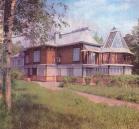
Metallostroy, settlement
METALLOSTROY, an urban settlement within the Kolpinsky District of Saint Petersburg, and a station along the Oktyabrskaya Railway. As of 2001, the population count was 23,700 inhabitants
|
|
|
|
|
hidden
|
Meyerhold V.E., (1874-1940), director
MEYERHOLD Vsevolod Emilievich (Karl Kazimir Teodor Meiergold, before Orthodox christening in 1895) (1874-1940), director, actor, pedagogue, theatre worker, People's Artist of the Republic (1923)
|
|
|
|
|
hidden
|
Novaya Zhizn (New Life), newspaper (1917-1918)
NOVAYA ZHIZN (New Life), a public literary daily newspaper which appeared in Petrograd from 18 April (1 May) 1917 until 16 July 1918 (with a total of 354 issues). A. N. Tikhonov was the official publisher (real name А. Serebrov) but it was M
|
|
|
|
|
hidden
|
Penaty, Museum Estate
PENATY (411 Primorskoe Highway, Repino) is a museum estate of I. E. Repin, a branch of the Museum of the Academy of Fine Arts. The museum is located near Repino railway station (before 1944, the place was called Kuokkala; in 1918-39
|
|
|
|
|
hidden
|
Professora Popova Street
PROFESSORA POPOVA STREET (in the 1810s - Pesochny Avenue, from the middle of the 19th century to 1940 - Pesochnaya Street), between Aptekarskaya Embankment and Pesochnaya Embankment, on Aptekarsky Island
|
|
|
|
|
hidden
|
Salons, Circles and Literary Gatherings (Entry)
SALONS, CIRCLES AND LITERARY GATHERINGS. During the 18th century regular gatherings of writers were uncommon, but those that there were portrayed different stylistic and philosophic positions
|
|
|
|
|
hidden
|
Smena (The New Generation), newspaper
SMENA (The New Generation), founded as the newspaper of the workers' and peasants' youth by the provincial committee of the Revolutionary Communist Youth League
|
|
|
|
|
hidden
|
Subway
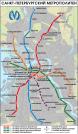
SUBWAY. First subway projects in St. Petersburg date back to the late 19th century. In 1889 the Administrative Committee of the Baltic Railway came up with a project of a subway line connecting Baltiysky and Finlyandsky Railway Stations
|
|
|
|
|
hidden
|
Tsentralny (Central) District
TSENTRALNY (CENTRAL) DISTRICT, an administrative-territorial entity within St. Petersburg, with the territorial administration situated at 176 Nevsky Prospect. The district was set up in 1994, when Smolninsky District
|
|
|
|
|
hidden
|
Union of Writers, the Leningrad Department
UNION OF WRITERS of the USSR, from 1958, of the Russian Soviet Federative Socialist Republic, the Leningrad Department or the Leningrad Writers' Organization. The Leningrad Department of the Union of Writers was established at the First All-Union
|
|
|
|
|
|
hidden
|
|
hidden
|